Monday, October 5, 2020

How Often To Change Your Home Air Filter

How Often To Change Your Home Air Filter


Changing your air filter is a crucial element that contributes towards keeping your HVAC functional. Knowing when to replace it can be a little bit tricky due to various reasons.

Every home is slightly different from the other, and that can affect when to change the filters. The type of air filter could also be another determining factor on how often to replace. Below are some factors that determine how often you can change your air filters.

Frequent Allergy Experiences


Much as the outdoor air can be harmful, the indoor air can be worse. An allergic person can suffer from the dust and dander in the air expelled from the AC unit. People sensitive to airborne particulates can have terrible and consistent coughs, runny noses, and other allergy-related symptoms.

People with severe allergic reactions need to change filters more often or get special filters, while others with little to no reactions can replace every less often.

Pets in the Home


Pets such as dogs and cats can make matters worse about how often to replace your home air filter. You'll have to deal with more dust, pet dander, and fur, which moves in the air within your home and even gets worse when seasons change. The elements block the flow of air in the filter. If you have pets, consider replacing your filter at least every sixty days. However, if you have multiple pets, you may want to replace it more often.

Younger Children at Home


Children are often sensitive to various elements such as dust and other air pollutants, which can easily affect life quality. Meaning, you need to keep the indoor air fresh and of good quality. In this case, consider replacing your air filter every 2 to 3 months at a minimum.

Things that Affect the Lifespan of Your Air Filter


Several factors affect the lifespan of your air filter. Knowing the key areas will help you keep a close eye to your air filters and ensure that the air handler unit remains functional.

Constant Operation of the System


Some units seemingly run around the clock, especially in the scorching heat of Phoenix's summers. However, during temperate climatic times, you may need to use the system for only a few hours a day, which means that the filter could potentially last the whole season.

The Size of Your Home


The size of your home dictates how often to change the air filter. The home size determines the unit's energy, which plays a crucial role in how often you should replace the air filters. A smaller home requires less air from the system, which could mean fewer filter replacements.

On the flip side, a larger unit requires more energy to dispense clean air within the house, which means your filter will last for a shorter period. So, it would be best if you changed the filters often.

Daily Habits


Those who smoke regularly indoors can cause the cigarette smell and its toxic byproducts to penetrate the air filter. This can be harmful to those who live in the home and decreases the lifespan of the filter.
How to Know When to Change Your Air Filter


The Air Conditioner Is Too Hot


When your unit becomes too hot, it's a clear sign that you need to change the filters. A clogged filter makes the system use a lot of energy to keep the house cool, leading to frequent air conditioner repairs. Therefore, you need to change the air filter frequently to avoid further damages to the unit.

Air Not Cold Enough


Reduced air circulation in the home attributes to various problems. The first place to check when you notice that your unit isn't cooling is the air filter. When the filter gets dirty, it blocks fresh air, causing the home to become hot. It's a sign that you need to change the air filter.

Increased Electricity Bills


An increase in electricity bills often means there is something wrong with your unit. It could be a fault within the system. Although the bills could go high in hot seasons due to the unit's high usage, it gets even worse when you have a dirty air filter. Once you notice higher bills, it could be time to change your air filters.

The Bottom Line


Every part of your HVAC unit needs to work correctly so that the unit remains functional. Meaning, you need to ensure that you work with a professional who will help you check every part of the system to ensure that it's well functional. It's how well you maintain your HVAC that determines how long you enjoy it. If you notice any slight changes in the system, it could be a sign to call for an expert to fix the issues.


Wednesday, September 30, 2020

Know When To Replace Your Commercial Refrigerator Or Compressor

Know When To Replace Your Commercial Refrigerator Or Compressor


Commercial refrigerators are essential to many industries. Food services, gas stations, and convenience stores rely on proper refrigeration for much of their sales. When a residential refrigerator needs to be repaired or replaced, it is often easy to detect because it's an integral part of the home. While we may not live at work, we need both residential and commercial refrigerators to function properly.

When Does A Commercial Refrigerator Need To Be Replaced?


When a commercial refrigerator or compressor needs to be replaced, it isn't always obvious. Food that goes bad or rancid before the expiration date can smell, and customers may complain, but that's not the only sign a refrigerator is having problems.

A compressor is an integral part of the commercial fridge. A compressor consists of coils, piping, gaskets, and controls that can be difficult to replace if a refrigerator is over ten years old. Once a compressor ceases to work, the refrigerator cannot pump enough cool air to match the temperature setting and is considered faulty. When a compressor ceases to work all together, the refrigerator will likely stop running.

Signs a commercial refrigerator needs to be replaced include:


  • The sudden influx of frost

  • Puddles of water surrounding the fridge

  • Loud or unexpected noises coming from any part of the refrigerator

  • A sudden increase in the electric bill

Energy Efficiency for Commercial Refrigeration


When a commercial refrigerator ceases to work correctly, it can dramatically increase an energy bill's cost. Whether this happens all at once or a little bit over time, you could be spending far more on bills than it would cost to replace the commercial refrigerator.

According to the U.S. Small Business Association, approximately a quarter of electricity consumption is from commercial refrigeration. Buying an up-to-date commercial refrigerator is an investment not only for the quality of service provided but also for future energy bills.

If a commercial refrigerator is over ten years old, repairing it is not advised. It is less expensive in the long run to replace a commercial refrigerator if it is close to a decade old. Using a newer model, you can spend less money on bills and future repair costs.

3 Factors To Consider When Replacing A Commercial Refrigerator


If you haven't replaced your commercial refrigerator in several years, you may not know which type to buy. Depending on your needs, commercial refrigerators come in different sizes with different benefits.

1.) Repair costs. Buying a less expensive commercial refrigerator has its positives and negatives. While you may spend less money upfront, there may be more repair costs to factor in. The cost to repair a commercial fridge can be higher than a residential fridge, and if you are not aware of the price, it can catch you off guard. Most people schedule yearly repair checks so that the cost doesn't build up over time.

2.) Reliability. Commercial refrigerators must be reliable when running a food service. An energy-efficient refrigerator won't raise utility costs and can be used in almost any business. For questions about which appliance would work best for your specific energy consumption, a trained technician can help.

3.) Functionality. Different refrigerators are built for various purposes. Depending on the type of business you run, certain refrigerators may work better than others. Whether you need glass doors or extra room, commercial refrigerators come in a wide array of styles.

Some of the most popular commercial refrigerators include reach-in refrigerators designed for kitchens, worktop refrigerators that can be used as a makeshift table, and walk-in coolers. Walk-in coolers are a wise investment for businesses struggling with Arizona heat. Large quantities of food that must be kept fresh and healthy to eat need serious refrigeration.

Commercial refrigerators will usually need some kind of refrigeration maintenance. While this should not happen on a regular basis, it is wise to have scheduled visits to keep appliances running smoothly. Monthly checks that can be done without a service technician can include checking the gaskets, paying extra attention to the drain, and cleaning the condenser.

For help replacing or repairing appliances, our trained technicians can help. We offer help with a variety of A/C systems so that you can maximize your business's potential. For more information, please call or email today.

Reach in commercial refrigeration replacement units

Monday, September 28, 2020

Do I Need to Winterize My Evaporative Cooler in Phoenix? 

Do I Need to Winterize My Evaporative Cooler in Phoenix?


While Arizona has a surprisingly diverse range of biomes and climates, Phoenix is by far its most well-known city for heat extremes. With temperatures soaring higher than 90 degrees more than 160 times each year, and a hot season that spans almost ten full months, Phoenix is easily one of the hottest large cities in the United States. It's also very dry. As such, numerous households throughout the region rely on a strategic combination of refrigerant-based cooling equipment and evaporative coolers. Also known as swamp coolers, evaporative coolers can benefit from routine maintenance and timely winterization. Read on to find out why.

Four Benefits Of Winterizing The Evaporative Cooler In Your Phoenix Home


Whether used as standalone cooling solutions or as part of more complex needs-specific cooling plans, evaporative coolers can produce a considerable change in the indoor environment. Sadly, however, just one harsh winter can leave this equipment under-performing or severely damaged. Timely and effective winterization strategies can prevent expensive repairs and far more costly replacements.

Stave Off Problems With Mildew And Rust


There's always a significant amount of stagnant water at the base of an evaporative cooler. Over time and absence of proper maintenance, this can lead to problems with rust and mildew. When this standing water starts to freeze and expand, additional damages will arise. During winterization, standing water at the base of your evaporative cooler is emptied via the drain plug. Excess minerals are then completely flushed away. The collection pan is dried, and the dangers of freezing, expansion, corrosion, and contamination are eliminated.

Winterization Keeps Your Cooler Protected From The Elements


No matter what the cold season has in store, your evaporative cooler will always be exposed in part to the natural elements. For instance, when freezing isn't a problem, accumulations of dust and other airborne particulates can find their way into the ducts and the unit motor. Coolers that are left exposed year-round tend to wear down much faster than those that are routinely winterized. Measuring your unit and investing in a proper-sized cover will help prolong the cooler's lifespan.

Winter Covers For Evaporative Coolers Help Prevent Heat Loss


Although much of the year is probably spent trying to cool your living space down, consistent heat loss during the colder months will prove equally frustrating. Covering your swamp cooler can limit heat loss by sealing up cracks, gaps, and other openings around the installation through which warm air might otherwise escape. For optimum efficiency and the least amount of heat loss, be sure to check for cracks and gaps throughout the home.

Keep The Water Line From Freezing


Frozen water lines are always problematic in outdoor plumbing and cooling components. As water freezes, it expands or increases in overall volume. This expansion can rupture any transport line or other component that holds it. The potential for freezing and expansion is one of the top reasons to have your evaporative cooler properly winterized. You don't want exceedingly cold temperatures to sneak up on you. Avoid these problems by shutting the water supply valve off, disconnecting the supply line, and letting all water slowly drain out. Then, place the waterline down in an area where it cannot be affected by severe temperatures. With our evaporative cooler winterization services, all of this will be done for you.

When To Winterize Your Swamp Cooler


Winterization should be performed just when you no longer need your evaporative cooler on a daily basis, and slightly before truly cold temperatures hit. For many Phoenix households, this is usually in the mid-to-late fall, right around November. Check for temperature highs that are averaging in the mid-50s and take note of whether you're household is using the cooler increasingly less often.

Comprehensive and model-specific winterization is often best performed by licensed professionals. Scheduling your winterization service in the early to mid-portion of fall is a great way to avoid the last-minute, seasonal rush. This is also an excellent time to schedule a full fall maintenance appointment to undo the ravages of the past hot season. Be prepared to have spring maintenance performed again, just ahead of summer.

Additional Strategies For Preventing Heat Loss In Your Phoenix Home


With every heating and cooling system, heat loss or air leaks throughout the home are a critical concern. These problems can have an impact on how hard your equipment has to work, how much wear it sustains, and how long it will last. More importantly, they can also have a regular and sizable impact on your home energy spending.

Beyond covering your evaporative cooler in the winter and sealing up air leaks at all windows and doors, you should additionally assess your home's insulation. This should have a sufficiently high r-value for the region and for the general needs of the building. If you believe that your home insulation is too sparse or rated too low for optimum energy efficiency, consider having it replaced or enhanced.

Winterizing your evaporative cooler will make this essential equipment last longer and work better. This is the surest way to prevent damages and limit wear as colder temperatures set in. Call us today to have your evaporative cooler or other home cooling equipment professionally inspected, winterized, and maintained.

Saturday, September 19, 2020

FAQs to Determine if You Should Repair vs. Replace HVAC

FAQs to Determine if You Should Repair vs. Replace HVAC


The Heating, Ventilation, and Air Conditioning (HVAC) system is among the most expensive and vital parts of a home. This is the reason why homeowners are always in a dilemma on whether to repair or replace the system when it starts to display warning signs. When your heating and cooling system is underperforming, you immediately call your contractor as you are used to repairing the system.

Before deciding whether to repair or replace, you have to consider the cost, health, home comfort, and safety concerns. Let us look at what you should consider before repairing or replacing your HVAC.

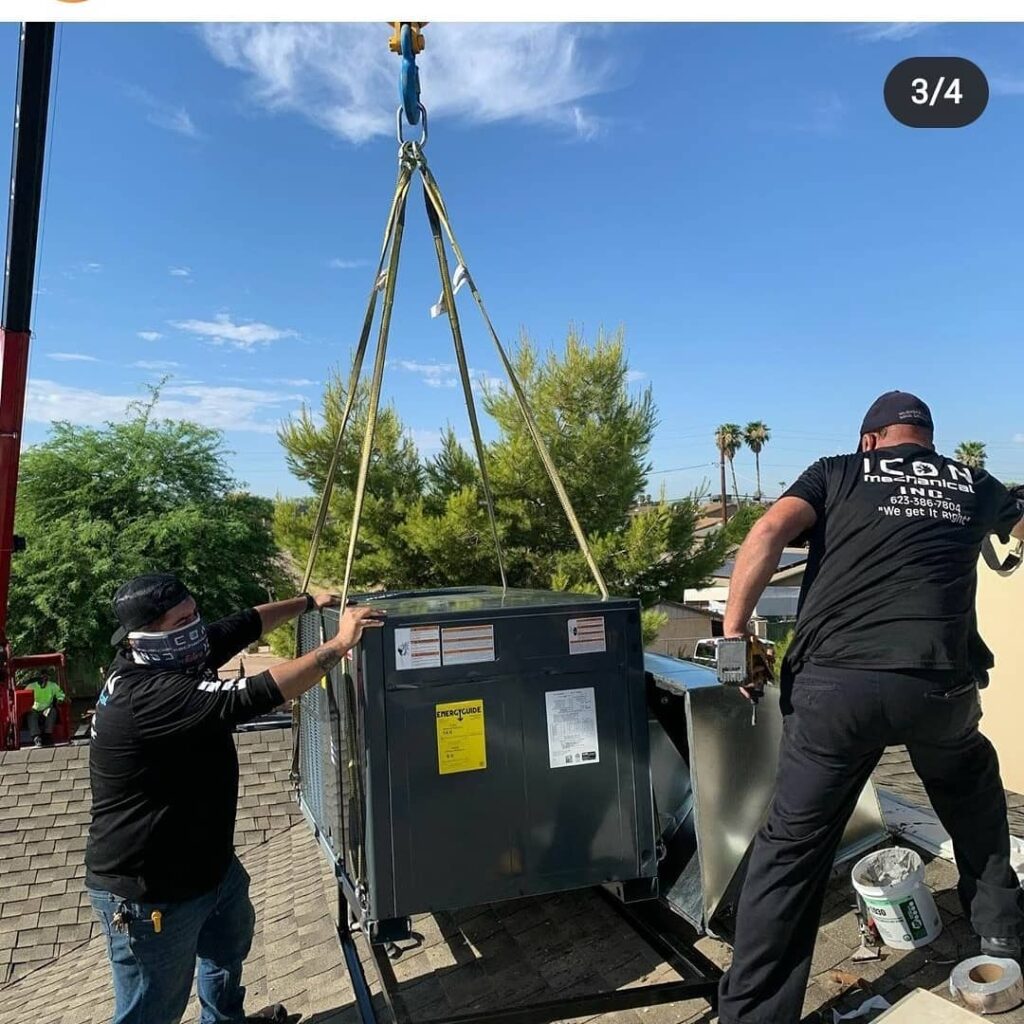
Icon Mechanical Techs doing an AC replacement in Phoenix

The Age of your HVAC system


If you have been using your HVAC system for more than ten years, you should consider replacing it. However, most systems have a lifespan of about 15 years; therefore, if the system is not yet that old and only needs minor repairs, you might be able to get away without replacing it. But, it would be best if you considered the cost of repair vs. using that money towards a new system.

A system that is over ten years old and keeps breaking down should be replaced instead of spending more money on its repairs. Note that when using an older system, you are probably spending more on electricity bills than a newer model would consume. Technology has enabled the manufacturing of modern systems that are more energy-efficient, saving you a significant amount of money on utility bills.

Repairs Cost more than 50% of the Cost of Replacing


If you are still undecided about repairing or replacing your system that is more than ten years old, it will make more economic sense to purchase a new system. All HVAC systems need repairs one time or the other. If your system's repair cost often costs more than fifty percent of a new system's cost, go ahead and purchase a new system.

Increased Amount of Dust in the House


Apart from the delivery of heated and cooled air in the home, the HVAC system provides ventilation as well. An efficient system improves air quality inside the house. This is done by removing dust, dirt, pet dander, and keeping humidity levels under control. If, in recent weeks/months, you have noticed more dust in the house than before, it might be a sign that your system has reduced its efficiency in removing dust. It also may mean that you should consider cleaning your air ducts.

Accumulation of dust in the home is a danger to your family's health as it can cause allergies and asthma. If you have small children or older adults in the house, you should immediately replace the system as they are more prone to acquiring respiratory diseases.

Inconsistent Temperature in the House


An HVAC system that struggles to provide consistent temperature in the home should concern the homeowner. Inconsistent temperature translates to your system being unable to supply conditioned air throughout the house.

Temperature inconsistencies are caused by several factors: low fluid levels, a broken thermostat, clogged filters, cracked ducts, improper ductwork installation, or severe motor damage.

Some of these issues, such as clogged filters and low fluid levels, can be rectified without replacing the entire system.

Contact Icon Mechanical to assess all the parts that are not working and determine if it would be better to repair them or replace the system. Opting to keep using the HVAC system as it is may continue to cause discomfort in your home in addition to increasing your energy bills.

Compare the Cost of Repair vs. Cost of a New System


Get an estimate of a new unit


Credible HVAC installation services will give you an estimate of a new system free of charge. They go further to help you compare different models and their energy efficiency. The estimates will help you determine the real cost of a new system and its savings on monthly utility bills.

Gather your utility bills


Retrieve your utility bills to determine the actual amount you are spending on energy with your current HVAC system. Pick peak summer months and compare them with the months when the AC is not in use and average the amount of a few months from each season. This will reflect the cost of energy consumed by the unit. Compare that with the estimated energy cost of a new unit and project the difference over a few years.

Add up the cost of repairs


You already have an estimate of what it will cost you to repair the HVAC unit. But, if the unit is over five years old, it will probably need another repair within two years. What's the estimated cost after two years? The estimates will help you know how much you will spend with both options.

With an old HVAC unit, an AC replacement could be better for you. Current HVAC systems have incorporated technology in their manufacture to give you better comfort and safety for your family. The systems promote health as they remove dust and allergens more efficiently than older models. Contact your local HVAC installation service for a quotation on repairs or a new system.

Monday, September 14, 2020

Your HVAC Maintenance Checklist for Fall/Winter

Your HVAC Maintenance Checklist for Fall/Winter


Are you concerned about ensuring your HVAC system works well for this coming winter? As long as you invest in proper maintenance practices, there shouldn't be a problem. Fortunately, this is easy since all you have to do is ensure that the regular seasonal check is done on time and correctly.

Fall leaves in the grass indicating it is time for an autumn AC maintenance serviceIn addition to that, you also want to have one of our AC Service experts check the system. Our experts check all of your system's essential components, ensuring that you get peace of mind with the surety of a fully-functioning AC.
Factors that Affect your Regular Maintenance Plan


Not all AC units have similar maintenance requirements. Each brand and model of unit requires a specific approach. Some of the factors affecting how you conduct the maintenance include:
  • How old the HVAC system is

  • How big the system is

  • The current condition of the units

  • The specific brand requirements

  • The frequency of use

  • The location of your units

Checklist for AC Unit Maintenance in the Fall/ Winter Season


With the above factors in mind, users need to understand what it takes to properly maintain their units in preparation for the fall/winter season. Several things have to be considered when planning out the maintenance program. Generally, the following should come to mind:
  • Using the proper filters

  • Clearing debris on the outside unit

  • Eliminating clogged drains

  • Ensuring good airflow in ducts and vents

  • Inspecting fan blades

  • Monitoring changes in noise type and level


For a general approach during the fall/winter season, focus on the following aspects:

Clean Air Filters


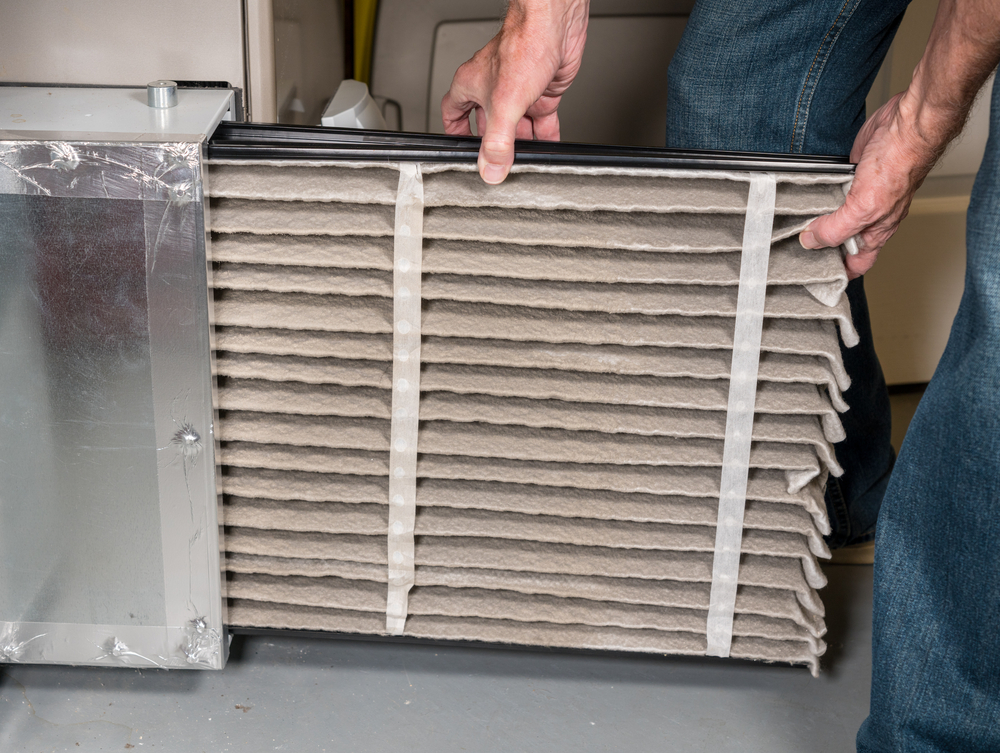
One of the things to focus on during the routine maintenance is the air filters. These need to be checked regularly. If they are reusable, they should be cleaned in case debris accumulates on them. Alternatively, if they are the less expensive throw-away type, replace them every month or two.

Maintaining the filters in good condition is one way of guaranteeing good air quality supply for your family's needs. Usually, clogged filters translate to an overworking furnace, and in turn, higher utility bills. You can clean or replace the filters on your own, or call an HVAC expert to do a thorough job.

Clear Debris and Dirt


Remove all forms of dirt and debris from the AC unit. This is even more important for ground-level outdoor units. Have weekly checks to remove any dirt that could interfere with the overall functioning of the unit. You may discover that the unit has many pollen, sticks, dirt accumulation, and the leaves that have fallen as the colder weather sets in that hinder the unit's optimal functioning.

Regular checks make it possible for AC owners to discover any lodged items that could interfere with airflow. You may need to use different cleaning methods depending on the type of debris you need to eliminate.

Clean Interior Air Vents


One of the most important preparation hacks for your AC is cleaning the air vents or registers in your home. These tend to get a build-up of pollen and dust on them, minimizing the airflow and negatively influencing the air quality in your home. Make it a habit to periodically clean the air vents, if you want the AC to function optimally all year round.

What's more, it is easy to clean the air vents, which means you should not have a problem doing it that frequently. All you need is a damp cloth and perhaps some household cleaner.

HVAC Professional System Check


Cleaning the system regularly helps keep the AC and furnace working optimally all year long. Sticking to the suggestions made above should help keep your system running all-year long without needing many repairs. However, like all machines, the system may break down. When this happens, make sure that you call a professional to assess the situation. You can also involve our experts in your routine maintenance just to be sure that you are doing it right.

Do maintenance on the AC and furnace units before every season change to keep them working optimally. Factor in the type, age, and condition of the unit when scheduling maintenance checks. Bring in a professional as an easy way to ensure that you are on the right track. Do not hesitate to contact Icon Mechanical for professional assistance.

Tuesday, September 1, 2020

Why Installing a New Air Conditioner Can Decrease Your Utility Costs 

Why Installing a New Air Conditioner Can Decrease Your Utility Costs


Energy costs make up a significant portion of every homeowner's monthly recurring expenses. Consequently, acquiring energy-efficient appliances can help you save up to 30% on utility bills.

With the scorching summer temperatures, almost half of homes in the US have installed central air conditioners.

On average, $100+ is the monthly expense an American homeowner spends on electricity bills. Annually $1200+ is spent on lighting and cooling expenses. That average is likely higher in the area surrounding Phoenix, Arizona due to the hot temperatures for half of the year.

With the advancement in technology, new and improved high-quality air conditioners keep emerging. For that reason, after your AC hits the 10-year mark, you should consider installing a new one.

Installing a new air condition gives you a guarantee of many years of comfortable and fresh air. Below are the other benefits any homeowner will enjoy from a new AC installation:

Unbeatable Comfort

As the AC ages, it tends to face issues like failure to turn on, blow cold air, make noise, and leak water outside, among others.

A new installation, therefore, fixes all the issues mentioned above. A compressor sound insulator ensures that the AC is not making noise when it's working.

Long durability

New air conditioners have features like baked-on powder paint, having a WeatherGuard and WeatherGuard II top, which resist corrosion in that they can thrive in any weather. The outdoor coils are made of aluminum, which ensures the air conditioner can operate for many years.

Provision of improved indoor air quality

Air conditioners not only cool your home but also ensures the indoor air is clean and purified. A new offer you a technology which makes the indoor air quality better.

It guarantees humidity control, efficient ventilation, and high air purification.

HVAC add-ons like improved filtration systems help eliminate dust, mold, pollen, and other airborne pollutants from your home's air supply.

If your home has a history of humidity problem, installing a new air conditioner will save you the cost of repairing water leaks and condenser and filter, which cause dysfunction in your AC.

electricity-power-lines-at-duskA decrease in energy consumption

For the last 10 to 20 years, air conditioners have made significant improvements. One major benefit of advancement is the ability to minimize energy consumption in your household.

Comparing AC to cooling systems, there is a vast improvement in the amount of energy consumed.

If you plan on getting a new AC, look for one with Energy Star-certified unit since they meet strict energy conservation standards.

Choosing an AC with the good Seasonal Energy Efficiency Ratio (SEER) ratings is vital when upgrading to a new AC.


Reduction on Utility Bills

A new AC comes with the benefit of conserving energy. Accordingly, you can save on the average amount spent on electricity bills.

Climate Control recommends you conduct the right size calculation of your home square footage. The calculations ensure that the new air conditioner system you choose can effectively heat and cool your home.

Compatibility with High-tech Features

With a changing world, you need to keep up with the current trends. New air conditioners are made in that they are always compatible with add-ons, unlike older AC's.

High-tech conditioners give you the great benefit of switching to a smart thermostat, custom cooling, energy-efficient features, or zoning systems.

Why is a Better SEER Rating is Worth It?


To get more comfortable during the hot summer months, you require an air conditioner with a higher SEER.

There are two components of higher SEER which provide great indoor comfort to a homeowner. The two components comprise of a variable-speed blower and variable-speed compressor or 2-stage.

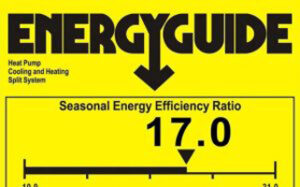
Seasonal Energy Efficiency Ratio(SEER) refers to the cooling output ratio of an air conditioner compared to its cooling season. It is then divided by the energy it consumes in Watts per hour.

Energy Guide Sticker: Seasonal Energy Efficient Ratio 17

The SEER can either be higher or lower, and a higher SEER has more benefits. A lower SEER rating is often a single-stage; hence it operates on one speed. Therefore, you have to keep turning the air condition on and off during mild weather, and you will experience uneven cooling.

During higher humidity levels using an air conditioner with lower SEER will make you feel hotter than the actual temperatures. This is because an AC with a lower SEER needs to operate for an extended period to produce humid air.

An air conditioner with a higher SEER, on the other hand, has a couple of benefits. When installing a new AC, you should consider choosing one with a higher SEER for the following reasons:

• High-efficiency units run for more extended periods at lower pressures and hence ensure active cooling and humidity.

• An air conditioner with higher SEER offers you affordable prices due to the government incentives and the manufactures' rebates on this high-efficiency system.

• A high-efficiency air conditioning system saves on energy consumption and contributes to less greenhouse gas emissions since fewer fossil fuels are being burned. You, therefore, contribute to reducing the cost spent used in environmental preservation.

• Use of less energy translates to less cost on energy bills. When you change from an old 8 SEER unit to a 16 SEER unit, you guaranteed a 50% save on your energy bill. It, therefore, translates to lower utility bills.

Size Matters


Yes. Size matters when it comes to your air conditioner unit. Before installing a new air conditioner, you should consider several factors: the condition of your ductwork, quality, cost, energy consumption budget, maintenance cost, air quality, and size of your home.

Considering the above factors saves you the costs incurred when fixing problems associated with choosing the wrong AC size.

In conclusion, you should consult an HVAC specialist for a check-up and when experiencing problems with your AC. They will offer you a cost-effective solution and help you choose the perfect energy-efficient AC for your home.

Tuesday, August 25, 2020

Central Air Conditioners vs. Heat Pumps in Arizona

Central Air Conditioners vs. Heat Pumps in Arizona


When it's time to upgrade your AC, the question on many Phoenix, Arizona homeowners' minds is which the best is – central ACs vs. heat pumps? The choice you make may impact your home comfort and budget, so you might want to know more about these cooling systems.

Fortunately, we have plenty of experts who have years of experience in this field. We are here to help you with the decision-making process and help you select the best choice for your home's needs. Let us look at how each cooling system works, their price, and how their energy efficiency compares.

We offer various cooling products that will deliver efficiency and amazing value for your Phoenix, Arizona, home. Our experienced technicians will install your new central AC or heat pump to meet your home's cooling needs for years.

Central ACs vs. heat pumps


The key difference between the two is that heat pumps use a heat exchange process to both cool and heat. And, technically, Air conditioners only cool the air. They are usually paired with a furnace for heating your home.

How central ACs vs. heat pumps operate


Central ACs and heat pumps depend on the same mechanism to cool indoor air temperatures. Both systems use a compressor to compress the refrigerant in the system. Air is compressed inside the compressor, causing its temperature to increase considerably. The air will then pass over the condenser coil, where it chills to a certain temperature.

As air passes over the coils, it expands, causing the temperature to drop and cool the evaporator coil quickly. A blower located within the air handler will draw air through the chilled evaporator coil to provide cool air to your home's interior. The key difference between the two cooling units is that a heat pump can reverse the process by changing condenser and evaporator coils' function to increase inside temperatures. Whereas ACs usually need to be paired with a furnace system to heat your home.

AC vs. Heat Pump Energy Efficiency


A cooling system's energy efficiency is an essential factor when selecting between a heat pump and an AC. This is because the more energy efficient your cooling system is, the less energy will be used, thus keeping your energy bills low. ACs and heat pumps' efficiency is measured using the SEER score. An AC and heat pump with the same SEER score; use the same amount of energy to cool homes under the right conditions.

ACs can have efficiency issues when outside temperatures are extremely high. This is because ACs are made to sufficiently cool your house when the difference in inside and outside temperatures don't exceed 20 degrees. During the Phoenix area hot summers, temperatures will rise significantly above this point, and an AC will not as effectively cool your home.

On the other hand, heat pumps don't have as much of an issue with high outside temperatures. They provide pretty close to the same efficiency cooling regardless of the temperature difference between inside and outside temperatures.

AC vs. Heat Pump Heating


ACs cannot heat your home; they are usually paired with a furnace of some type. As temperatures reduce, many homeowners turn off their air conditioners and use heating systems such as gas or electric furnaces for warmth.

The heat pump is unlike the AC as it provides heating by reversing the cooling process.


AC vs. Heat Pump Prices


Heat pumps can cost about more than simple ACs because heat pumps are used for both heating and cooling. But they are comparable and can even be less expensive than a complete AC/furnace system. They do operate all year round – which can shorten their longevity compared to the other system due to wear and tear in the system.

Which One Should You Choose?


Choosing between an AC and a heat pump depends on various factors, with the most key one being climate. Areas of Arizona such as Phoenix, usually have a temperature of 40 degrees and above in the winter which is fine for a heat pump. A heat pump will not work very efficiently in places Like Flagstaff where the temperature drops to below 40 degrees for extended periods of time. They often come with a backup heating element, but they lose their heating efficiency and consume more electricity.

Contact us when you need more information on ACs vs. heat pumps. We can provide skilled installation and maintenance services to deliver the best system operations from your AC or heat pump.