Monday, September 24, 2018

Home AC Recharge: How Often Does It Need To Be Recharged In Phoenix AZ?

Home AC Recharge: How Often Does It Need To Be Recharged In Phoenix AZ?


Many homeowners wonder how often they should recharge their ACs in Phoenix, AZ. The simple answer is "Never" unless there is a leak in the system. That is where preventive maintenance becomes essential. In fact, proper and regular maintenance can increase the efficiency and lifespan of your system. Refrigerant leaks can be avoided when you implement an appropriate schedule of maintenance for your HVAC system. There is no better time to have your AC unit serviced in Phoenix than before the summertime arrives. The Arizona heat can tax your system to such an extent that it may end up needing expensive repairs unless you have a proper maintenance schedule for the unit.

What Is A Refrigerant?


A refrigerant is a compound in a fluid or gaseous state that helps the air conditioner system in its cooling process. In fact, a refrigerant will absorb heat from the environment and cools your space. Without a refrigerant, there cannot be freezing, air conditioning or refrigeration technology. The refrigerant will absorb heat from indoor air and transit into a high-pressure liquid from a low-pressure gas. The refrigerant is then sent outside where a fan is used to blow hot air over the coils of the unit. It is then exhausted to the exterior. The refrigerant cools down and transits into a low-pressure gas once again. Another fan will blow air over the cooling coils to distribute the cool air throughout the building. Your home or office is cooled due to the repetition of this cycle.

Freon is a brand name of a popular refrigerant on the market today. In fact, Freon and refrigerant are almost used interchangeably in the HVAC industry. That is due to the popularity of the substance. Freon is a Hydrochlorofluorocarbon (HCFCs) which is known as R-22.

Why Shouldn't R22 Be Used In Your HVAC System?


R22 is a Hydrochlorofluorocarbon that is commonly used in almost all the old HVAC systems in the country. R22 was found to be damaging to the ozone layer of the planet. Hence, the EPA implemented a phase-out as a result of the "Clean Air Act" of 2010. In fact, R22 is not used in the more recently manufactured HVAC systems. These systems use an alternative refrigerant known as R410A that is more eco-friendly than R22. R410A doesn't damage the ozone layer of the planet. On the other hand, R22 is going to be completely phased out by 2020. The price of a pound of R22 has drastically increased during the past couple of years due to the phasing out of the substance. Once the refrigerant is completely phased out in January 2020, it won't be available even for servicing the existing units. That is why you shouldn't use R22 in your AC system. In case you have an old system that uses R22, you should consider replacing the unit or the gas in the system before 2020.

r22-and-r410a-refrigerant-containers

Why Would Your AC Need A Recharge?


Preventive maintenance can reduce the chances of recharging your AC. In case the AC doesn't cool your home, there might be something wrong with the system. In fact, there could be many reasons for this. A refrigerant leak is one of the most common issues in case your AC system isn't cooling the house as expected. There are many things to consider where home AC recharge is concerned. The process involves refilling your AC with the appropriate refrigerant.

Important Signs That Your System Needs A Recharge


Your HVAC system is built not to lose refrigerant during its operation. The refrigerant should last during the entire lifetime of the system under normal circumstances. But there could be many instances where a refrigerant leak can occur. Proper maintenance will help avoid such situations and prolong the lifespan of your system.

If your vents are blowing out room-temperature air, it is considered an important sign that your system needs a recharge. On the other hand, the build-up of ice/frost on the unit is another vital sign in this regard. Refrigerant leaks are also caused due to the damage to the system.

Why You Need The Correct Amount Of Refrigerant For Your AC


Having too much refrigerant in your AC system is just as bad as not having enough. In fact, too much refrigerant in the AC will make it blow hot air similar to having too little refrigerant in the system. The system should have the correct amount of refrigerant to get the coldest air possible in your home or office.

The Process Of Fixing An AC Leak


Fixing a refrigerant leak in your AC is best left to a professional HVAC contractor in the area. It is not the best DIY project for anyone without extensive experience in the process. Make sure that you hire a reliable and experienced HVAC contractor in the area to fix a refrigerant leak in your AC.

Thursday, September 13, 2018

Indoor Air Quality And Your Health

Indoor Air Quality And Your Health


Indoor air quality is an important aspect to pay attention to. The overall indoor air quality of your home can play an integral role in you and your entire family's health. Because of this, it is essential to understand if it is harming you and anyone living within your household. Whether you are experiencing symptoms or not, you want to be aware of the overall quality of the air because symptoms will not always present themselves.

Below we discuss some potential symptoms to look out for when you are assessing your indoor air quality, possible respiratory health effects, how to diagnose air quality, what you might be able to do about fixing it, and the general AC maintenance that you should do to prevent it.

man with mask because of indoor air pollution

Potential Symptoms To Look For:


1. Allergies.


One of the sure ways to figure out if you are an air quality concern in your home is to figure out whether or not your allergies are being triggered (if applicable). If you are someone that suffers from allergies, it might be very tempting to just brush it off as a product of weather changes and seasonal allergies. However, it could be caused by a sensitive reaction to the indoor pollutants and containment that are dispersing into your air regularly by your AC unit.

No matter what you are sensitive to, indoor air pollutants can be at the direct root of your problem. A lot of people react and suffer from allergy symptoms when they are exposed to various things including irritants, pollen, or even dust.

2. More Severe Symptoms.


While you might experience various common allergy symptoms, you also want to be on the lookout for much more severe symptoms that might present themselves. Some of the more serious indoor air pollutants and contaminants like toxic mold growth, chemicals, and even asbestos can cause severe symptoms that might result in nausea, vomiting, fever, chills, and more. If you find yourself or anyone in your household experiencing these extreme symptoms, you will want to call a professional immediately to be able to accurately diagnose the problem that might be leading to extreme indoor air pollution.

Potential Respiratory Health Effects:


1. Short Term.


Over the short term, you might experience various symptoms related and virtually indistinguishable from a common cold or viral disease. Because of this, it makes it very difficult for successfully diagnosing air problems.

2. Long Term.


Various much more severe respiratory health problems can show up years after consistent exposure. In fact, symptoms leading to various respiratory diseases including asthma can occur in individuals that are exposed to bad indoor air quality over an extended period of time.

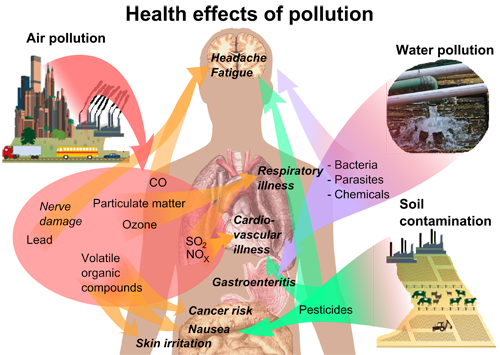
map of the body with Health effects of pollution

How To Identify Poor Air Quality?


1. Notice Symptoms.


The most significant indicator that you have an indoor air pollution problem is identifying and noticing symptoms as they occur. Symptoms of people living in the home is a crucial indicator, and it is likely the first thing that you will notice.

2. Identify Potential Sources.


An excellent way to figure out whether or not you have an indoor air quality problem is by identifying the different sources that could exist. By knowing what could cause the problem in the first place, you will be able to look out for any issues with it.

3. Musty Odors.


Another good way to tell if you have an air quality problem would be noticing any sort of musty odors stemming from your AC unit. If you notice a distinct and musty type of smell protruding from your AC unit, you are likely dealing with mold growth in your ventilation system. This type of mold growth is common. This is especially common if you do not regularly invest in routine yearly maintenance for your HVAC system. The best way to determine if you have a distinct odor emitting throughout your home is by removing yourself from your home and breathing fresh air and then placing yourself back in your home. You should be able to tell whether or not there is an odor present. If not, you can always use someone unfamiliar with the usual 'scent' in your home.

4. Walls.


Another indicator to determine if you have any sort of air quality problem would be to check out your walls. Sometimes, you might notice either excess moisture, condensation, or even mold growth on your walls. This will provide you with enough evidence needed to know that you might be dealing with poor air quality.

How To Avoid Poor Air Quality?


1. Keep Carpets and Floors Clean.


One of the biggest things that you are going to be able to do to keep your home free from airborne pollutants effectively is to keep your carpets and hardwood floors clean. You want to use a vacuum with a HEPA filter and potentially get your carpets cleaned by professionals.

2. Maintain Proper Humidity Levels.


Something you are going to want to do is to be sure to maintain proper humidity levels throughout the year. You want to maintain around 30 to 50% humidity to keep various allergens at bay. Dust mites and mold absolutely thrive in moisture-rich environments.

3. Routine HVAC Maintenance and Cleaning.


You want to invest in professional and routine HVAC maintenance and cleaning to keep everything functioning correctly and to keep your filters clean.

Overall, a lot that can be done to improve the quality of the air inside your home. If you follow the advice discussed in the article above, you should be able to do just that.  If you have any questions contact us.

Tuesday, September 4, 2018

How To Handle AC Smells Musty

How To Handle AC Smells Musty


Once you are finally at the point where you need to turn on your air conditioner for the first time in a while to kick off the summer, all you are likely hoping is that it works. This is where off-season maintenance comes into play. You need to carefully maintain your AC unit throughout the winter months to keep it ready for the warmer months when you will be using it a lot. Routine maintenance will not only help you keep your AC unit as clean as possible, but a professional can spot problem areas that might cause issues down the line.

However, AC maintenance is not only for keeping everything working correctly. It is also to keep your unit free from the musty smell that can build up if you are not paying attention to it. Below, we will be going over what makes your AC unit smell, whether or not it is dangerous, how to get rid of it, and how to prevent it from happening in the first place.

What Is The Smell?


If you just turned on your AC unit for the first time in a while and your unit is kicking out a musty odor, your unit is in need of a thorough cleaning job. Unfortunately, that musty smell is a signal/sign that mold has grown and built up rapidly in your unit which can cause your unit to output a musty odor. Mold is something that tends to grow in cool and dark areas. Because of this, your air conditioning unit is a very prominent place to experience mold growth. For this reason, it is imperative to keep your air conditioning unit clean at all times.

Adult Woman Holding Nose because of bad AC smellWhat Causes It?


Evaporator Coil


There are various things that can cause mold growth or an odor problem stemming from your AC unit. For one, it can be your evaporator coil. If it ends up being your evaporator coil, you are going to want to be sure that your AC coils are routinely cleaned throughout the year. While it might be tempting to handle it on your own, it is always recommended to hire a professional for jobs like this.

Air Ducts or Drain Line


Another problem that could be causing your mold growth or odor problem is leaks in your air ducts or even a clogging in your drain line. While these aren't necessarily the first places you might think to look if you are experiencing a musty odor, they are the likely causes of the problem. Either problem could result in an environment where mold can grow rapidly. If you are dealing with a leak in your air duct, it can be especially prominent to experience mold growth due to the damp and dark conditions.

Routine maintenance is going to be a great way to effectively avoid these issues from ever occurring in the first place. However, if you are dealing with something like a leak, it is going to need to be fixed to prevent the same problem from happening over and over again.

Is It Dangerous?


While it is not necessarily an immediate threat that can pose significant risks to you and your family's health, it is something that can cause long-term health complications if not treated promptly and adequately. Unfortunately, mold growth in your AC unit can become a huge problem primarily because it can then circulate throughout your entire home and become an airborne irritant that can cause issues with your respiratory system.

This is especially problematic for those that might have people living in their homes that suffer from various respiratory illnesses and disorders. A lot of people will experience allergic-type symptoms when dealing with prolonged exposure to mold. Mold exposure is never a good thing, and it can cause even more severe problems in those that deal with significant sensitivities to it. Therefore, it is best to be avoided at all costs especially with something that can be easily prevented.

Overall, there are a lot of things that you are going to want to be aware of when it comes to dealing with musty odors and mold growth stemming from your AC unit. Regardless of the problem, you want to get it solved by a professional as soon as possible. While not necessarily an immediate threat, long-term exposure to mold is never a good thing. By investing in routine maintenance for your AC unit during the warmer months, you should be able to easily prevent a lot of these problems from becoming a larger issue. You want to focus on hiring a professional to perform the routine maintenance because they know and understand what to look for and the signs and problems that could steamroll into mold growth in your AC unit.

If you have a bad smell in your house because of your AC unit, be sure to contact Icon Mechanical.