Monday, June 29, 2020

Need A New Air Conditioner? Everything You Should Know First

Need A New Air Conditioner? Everything You Should Know First


Thermometer in hot AZ summer sunIt's summer.....when we come in to seek refuge from those hot and steamy days, most of us find shelter in cool temperatures, thanks to our air conditioner. How is your air conditioner functioning these days? Are you cool as a cucumber, or are you sweating and steaming over an AC unit that doesn't seem to be running as efficiently as it should be? A properly functioning AC unit is essential in the Phoenix area for much of the year. If you are considering making the investment in a new air conditioner, read on to see what you should know to make the best purchase possible:

When should I replace my old AC?


If your air conditioner is no longer cutting it, it won't be long before you detect an issue with your cooling system. You should consider the replacement of your unit if:

    • It is more than ten years old

    • If it is not efficiently cooling your home

    • If you are facing expensive repairs that rival the cost of a new unit

    • If your energy bill has dramatically risen in recent months

    • If you experience frequent breakdowns

    • If your AC uses R22 Freon

    • If the temperature of your home is not comfortable

    • How should I select a new system?


There are some things that you should consider when selecting a new AC system for your home.

You'll need to consider the SEER, or seasonal energy efficiency ratio, of the unit you plan to buy. In general, the higher the SEER value, the more efficiently it will cool your home. Keep in mind you don't necessarily need the unit with the highest SEER value to efficiently cool your home. Any reputable HVAC supplier will be able to calculate your required SEER ratio based on the square footage and layout of your home.

You'll need to choose the unit that is the right size for heating and cooling your home. The term "tonnage" is used to determine cooling efficiency per square foot of your home; pay attention to this term as you seek something that is energy efficient without breaking the bank or obstructing the view out of your windows.

Look for fair prices; determine what you can comfortably pay for when purchasing a new unit, and stay within that budget. Ask about SEER and tonnage capabilities, and see what options exist for the AC unit that is right for you and your family.

Get bids from several different HVAC specialists to find the best price on the most efficient unit. Most dealers are competitively priced and will work with you to find solutions that work for you and your family. Don't be afraid to ask questions and seek additional information as you make this important purchase, as the right one will serve you and your family well for years to come.

Does size matter?


Having the right size AC unit for your home is essential for proper cooling and manageable energy costs. If you have an AC that is too big for your home, you can cause short-cycling. This condition occurs when your home is cooled before your unit has had a chance to finish a proper cycle, which is extremely hard on your AC. If a unit is too small, it will have to work harder than it should, resulting in a higher risk for breakdown and rising energy costs. Calculating things like SEER and tonnage will give you an accurate measure of what type of power is needed for your home.

Energy efficiency ratings


An energy efficiency rating provides you with a ratio of useful cooling output to energy cost. To calculate the energy efficiency of a unit, you need only to divide its cooling capacity by its power. In general, the higher the EER score, the more efficiently it will cool your home while keeping energy costs low.

What kind of budget should I plan for?


The average new installation of an AC unit ranges from $3350-$5912. Most homeowners do not have this in extra cash, so many HVAC installers and dealers will have financing options available. If you can cool your home with your current unit, it might be wise to save up a portion of the cost before purchasing your new unit. Planning for this important purchase is investing in your home's future comfort and energy efficiency, so plan smart!

Why professional installation is essential


A professional HVAC installer will have the tools and knowledge needed to install your new unit correctly. Attempting to do so yourself can result in injury, damage to your home, and improper airflow and circulation throughout your home, resulting in damage to your home and to your unit. Many professional installers also offer maintenance and installation plans that are ongoing and monthly; for a small service fee, you can have your unit regularly cleaned and maintained, keeping it efficiently running for years to come.

Ready for a cool summer? Give us a call!


We know how important it is to keep your home cool and comfortable during the hot summer months; trust us to get your installation and HVAC maintenance done right! Call us today for a quote and valuable information on the type of AC unit that can make your home your summer oasis!

Monday, June 22, 2020

How Often Do Air Conditioners Need To Be Serviced?

How Often Should You Have Your Air Conditioner Serviced?


Even if your air conditioning unit does not exhibit any problem, it is always a good idea to have it cleaned, inspected, and serviced at least once a year. Servicing air conditioners ensures that they operate with high efficiency and can regulate your home temperature adequately during the hot months. As the HVAC system functions, it accumulates dirt and dust in the hidden areas such as air filters and condensing coils. When not checked, the system could lose up to 5 percent of its functioning efficiency due to the clogging, thus, affecting its cooling ability. Most air conditioner service companies offer maintenance services, in which they offer cleaning and repair services to your HVAC system and repair any noticed fault. Some service providers even go to the extent of offering discounts when customers consider an annual plan that would warrant a regular maintenance schedule. However, below are some of the questions to ask yourself before considering an air conditioner service.

Is It Necessary To Service The AC Every Year?


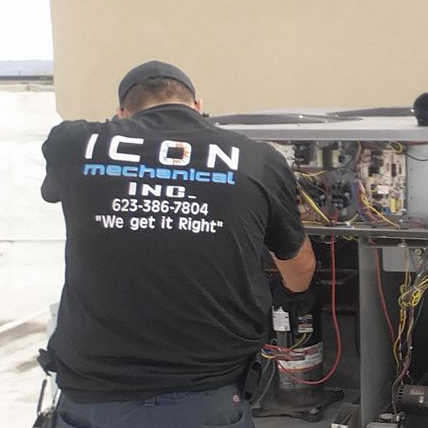
ac unit being serviced by Icon Mechanical technician for yearly maintenanceYES! Servicing your AC unit every year would mean that the maintenance costs pay themselves through enhanced energy efficiency that helps in saving utility bill money. An annual maintenance service by a professional HVAC company will ensure that you reduce your monthly electricity bill by approximately 15 percent and prevent frequent breakdowns. On the contrary, replacing your air conditioner will mean spending thousands of dollars on a new one. Even small repairs, which could otherwise be prevented by annual check-ups, could cost you several hundreds of dollars. An HVAC expert can always identify and address possible AC unit problems that could grow into costly problems if left unnoticed.

The air filters should be cleaned or replaced every month. If your air filters are clogged with dirt or dust, the AC unit will not work efficiently. A clogged filter would also hold contaminants that mix with the circulated indoor air. Replace or clean the filters every month, particularly when living in a dusty environment or living with pets.

What Happens If It Is Not Serviced?


One of the expected outcomes of an unserviced AC unit is the shortened lifespan. The average lifespan of an AC is between 10 and 20 years, but some can even operate up to 30 years. Cooling systems that do not receive regular maintenance services may not even last for 10 years. It is also likely that an older air conditioner that goes unchecked can be inefficient as it will use more energy, costing you more in the long run. Additionally, an AC unit that is not serviced increases the electricity bills. The HVAC system will not perform efficiently, which will mean more consumption of energy utilities. Alternatively, the AC unit would potentially break down due to unnoticed problems, thus, causing high repair costs.

An air conditioner that is not maintained may still function, but it won't operate efficiently as expected. This would create a greater indoor discomfort, particularly when the temperatures are high.

How Much Does It Cost For Air Conditioner Maintenance?


Most AC service companies provide low-cost maintenance inspections at a range of $75-$200, including cleaning of the AC and replacing the unit's air filter. The inspections are absolutely necessary because they improve efficiency while also making the unit to last longer. You will also need to recharge the AC refrigerant, which costs between $100 and $350. However, this is never done every year, except when there is leakage or a part of it needs to be replaced.

What Should Be Serviced?


An AC maintenance service should involve maintaining the blower, coils, motor, drain line, operating temperatures and pressures, refrigerant levels, supply lines and return, and connections. During the maintenance visits, the following activities should be done to ensure efficient functioning of the AC unit:

• Check the outdoor unit for any damages and free the area from debris, leaves, gunk, or weeds.
• When not at home, turn up the thermostat to lessen the load on the AC system.
• Always confirm if the indoor air vents do not harbor any obstructions.
• Call for repair whenever you notice water leaks, weird noises, and abnormal air temperatures.

How Often Should AC Coils Be Cleaned?


You should have your AC coils cleaned at least once every year. This is because dirty condenser coils can increase the AC system's energy consumption by up to 30 percent. Additionally, dirty coils slow down heat transfer, causing other problems like frozen evaporator coils, poor cooling performance, and overheating of the compressor.

When cleaning the condenser and evaporator coils, an air conditioner expert will gently clean the coils during a routine maintenance visit. The coils will be cleaned by removing debris and dirt and rinsing the coils using a hose. Although the evaporator is usually challenging to access, it can still be cleaned professionally.

An AC unit is an important gadget at home, more so in areas where temperatures are high. It is essential to hire a maintenance service company that can check your unit's condition at least once a year. Always check for an expert who is licensed as an HVAC contractor, and should have liability insurance to protect you when your AC unit gets damaged in the process or an injury occurs. In case your system appears to be working normally, but your contractor proposes expensive repair charges, it is vital to seek a second opinion from other companies with similar experience. A well maintained AC unit will last at least 15 years.

Monday, June 15, 2020

Air Conditioner Running 24-7

Should An Air Conditioner Run All Day & Night?


If you live in a place like Phoenix, Arizona, the summer heat can make your home pretty stuffy and unbearable. Especially for those spending a large part of their day indoors, it's tempting to allow the AC to run 24/7. Is it the best practice, and what can result from allowing the AC to operate continuously?

How Your Air Conditioner Works


Your air conditioner works by removing heat energy from your home. It does so by exchanging the hot air in the building with cooler air that it draws from outdoors. However, it isn't as simple as an air exchange.

In a split AC system, a compressor condenses and circulates the refrigerant through your indoor unit. This compression changes it from a gas to a liquid. The liquid is then pumped through evaporator coils. This is how the trade of cool air for hot air happens, with thermal energy being removed and sent outdoors.

Is it OK to Run Your AC all Day?


Some electrical appliances are built to run continuously. For instance, a computer server needs to be running throughout the year to facilitate user transactions. Thus, servers are equipped with adequate ventilation systems to keep excess heat from destroying the system.

Air conditioners, on the other hand, should not run 24/7. Not only is there a risk of damage to the unit, but also concerns that can affect your family budget.

 Air-Conditioner-Repaired-by-Technician

Keep Your Energy Bill In Check


An air conditioner that runs 24/7 ends up operating at an inefficient rate. Even if your AC were to maintain the same electricity consumption during constant operation, the fact that you can keep your home comfortable with the AC running a fraction of the day should be considered.

Wear and Tear


Air conditioners tend to break down when they are overburdened. This can happen because of a variety of factors. Failing to change air filters and top up refrigerant when necessary can lead to inefficient operation and subsequent breakdown.

Also, adopting best practices like properly insulating your home by plugging air leaks and using fans can help. The less work your air conditioner has to do, and the greater longevity it will have.

How Long Should Your AC Run Before Shutting Off?


Ideally, air conditioners should run for 15 to 20 minutes at a time. The strength of your AC unit should be such so that it cools your home to a comfortable temperature within that spurt of time. If your AC takes longer to achieve this goal, you may need a more potent AC.

This isn't a steadfast rule as some extremely hot days will require your AC to run for longer and even continuously for periods of time. However, if you find that your air conditioner is struggling to cool your space even on mild days without running constantly, you may need to replace it with a better option.

How Long Should You Keep Your AC Off Between Cycles?


On mild days, your AC should be taking three to four breaks per hour. This equates to approximately 15 minutes of off time throughout the hour. This will vary depending on how hot the weather is.

Is it Better to Run the AC All Day or Just at Night?


Air conditioners are at their most efficient when they are running at full blast. When an air conditioner operates non-stop at a lesser speed, this is where inefficiencies appear. Therefore, your AC should be set to run at spurts and cool your space down to your preferred temperature.

Also, regarding night-time operation, keep in mind that your body tolerates warmer temperatures when you are asleep. Therefore, there is no need to have the AC running throughout the night, especially considering that temperatures are generally cooler after dark.

Installing a Smart Thermostat


Because you shouldn't run your air conditioner continuously, it doesn't mean you have to suffer in the summer heat. Installing a smart thermostat can help you keep your home cooled to your preferred temperature. It will also keep your AC running efficiently as it will make sure the unit runs at full speed in short blasts. As we described earlier, this makes the unit consume energy efficiently.

Reasons Your Air Conditioner's Fan Won't Turn Off


One of the more common issues an AC might face is that the fan won't turn off. This can be due to a stuck relay that keeps the circuit closed. If not because of the relay, it could be that your thermostat may need to be replaced.

Before you get too stressed and think that the worst case is playing out, take a look at your thermostat settings. Try setting the desired temperature above your current room temperature. This will cause the AC to turn off.

If the AC fan is still blowing, check to see that the fan setting on the thermostat is not set to 'on' and that it still runs when you switch it to 'off' or 'auto.' After you've made sure that the settings are correct, get in contact with a knowledgeable technician.

Taking a Proactive Approach


There are measures you can take to ensure that you help your air conditioner do its job correctly. Try and keep your house as cool as possible so that the AC can function as efficiently as it can. Using curtains that are made out of reflective material will help mitigate the heating effects of the sun. By finding and plugging any air leaks, your home's temperature won't be affected by heat energy creeping in from outdoors.

Finally, make sure you have an air conditioner that is big enough to cool your indoor space without being too powerful to force it to operate at sub-optimal capacity. If you need your air conditioner repaired, Icon Mechanical will help you decide on the best option for your needs and resolve any issues you have with an inefficient home cooling system.

Thursday, June 11, 2020

All About Two-Stage Cooling

All About Two-Stage Cooling AC Units


The demand for two-stage cooling is rising at present because of the many benefits offered by the process. You may come across this term frequently if you are in the market for a new air conditioner or heating system. The process improves the efficiency of the HVAC system and reduces your energy bills over time. This article provides information on the two-stage cooling process.

What Is Two-Stage Cooling?


The two-stage cooling system means the HVAC unit consists of a compressor with two levels of operation. You can run the AC differently depending on your cooling needs. For example, you may run the AC unit on full capacity on a hot summer afternoon as well as run it on part capacity on milder days. With a two-stage cooling system, you won't experience days where the entire family is freezing due to "too much" air conditioning. The low setting in a two-stage system is usually adequate to meet the cooling demands of the average home 80% of the time. You will save on energy and utility bills as a result. That's why you need to invest in a two-stage cooling system right now.

The standard air conditioner system will run at full blast, whether you need the cooling or not. You will always get an elevated level of cooling from the standard AC system. Too much cooling can make you and your family uncomfortable at times. It wastes energy and costs you a lot of money. The two-stage AC system has a compressor that runs at two speeds - high and low. It consists of a variable speed air handler to control the amount of air flowing into your home. You can choose the high or low cooling function depending on indoor temperature levels to control the amount of air coming from the system. That way, you save on energy as well as live in a comfortable environment.

A two-stage AC system will spend most of its time operating at a lower speed. The low setting is usually enough to cool your home during summers. Even on hot and humid days, the low setting will keep your family comfortable. When the system is operating in a low setting, the system will work continuously - without the usual on-off cycle. This will lead to better energy saving, higher efficiency, and better dehumidification in the long run.

When you invest in a two-stage cooling AC system, it's all about demand. The two-stage system will initially use 100% capacity to reach the required interior temperature and then shift to part capacity to maintain the setting for as long as you need it. The perfect operation of a two-stage system usually depends on many factors, such as the outdoor temperature, energy-efficiency, and insulating features of the building. It would be best if you considered these factors when installing a two-stage cooling system in your home.

How Do I Know If My AC Is Two-Stage?


The two-stage cooling system comes with multiple heating or cooling wires. The best way to know if your AC is two-stage is to pop the thermostat of its base and take a look at the cables. Take a look at the wires that lead into the W and Y terminals. The heating wires lead into the terminals labeled with a "W" while the cooling wires lead into the terminals labeled with a "Y." In a two-stage cooling system, the heating wires will lead to W1 and W2 terminals, while the cooling wires will lead to Y1 and Y2 terminals.

Is It Worth Having And Why?


The part capacity operation of a two-stage cooling system has energy-saving benefits across your home. Reduced utility costs and increased energy efficiency are two of the most important benefits of investing in a two-stage cooling AC unit. It's entirely worth your investment because you can recoup the money within a very short time. Here are some of the other benefits of investing in a two-stage air conditioner system for your home.

Added Comfort - The two-stage system operates on a continuous cycle to make your home more comfortable. It circulates just the right amount of air to maintain the required temperature levels in your home.

Humidity Control - Since the two-stage cooling unit runs continuously, it does a better job of dehumidifying the air in your home. The standard unit runs on short and intense bursts of air and doesn't have enough time to remove water vapor from inside the house.

Prolonged Lifespan - The lifespan of an AC unit is affected by the regular on/off cycle. It's quite challenging to shut the system off and turn itself back on. The two-stage system doesn't have the wear and tear that come from the regular on/off cycle. The system will have a longer lifespan compared to the standard AC system.

If you are considering investing in a quality two-stage cooling system for your home, contact us for more information about upgrading your AC Unit.